
POL POT JOINS THE CONVERSATION
Trump’s corrosive habit of making everything about himself often backfires.

POL POT JOINS THE CONVERSATION
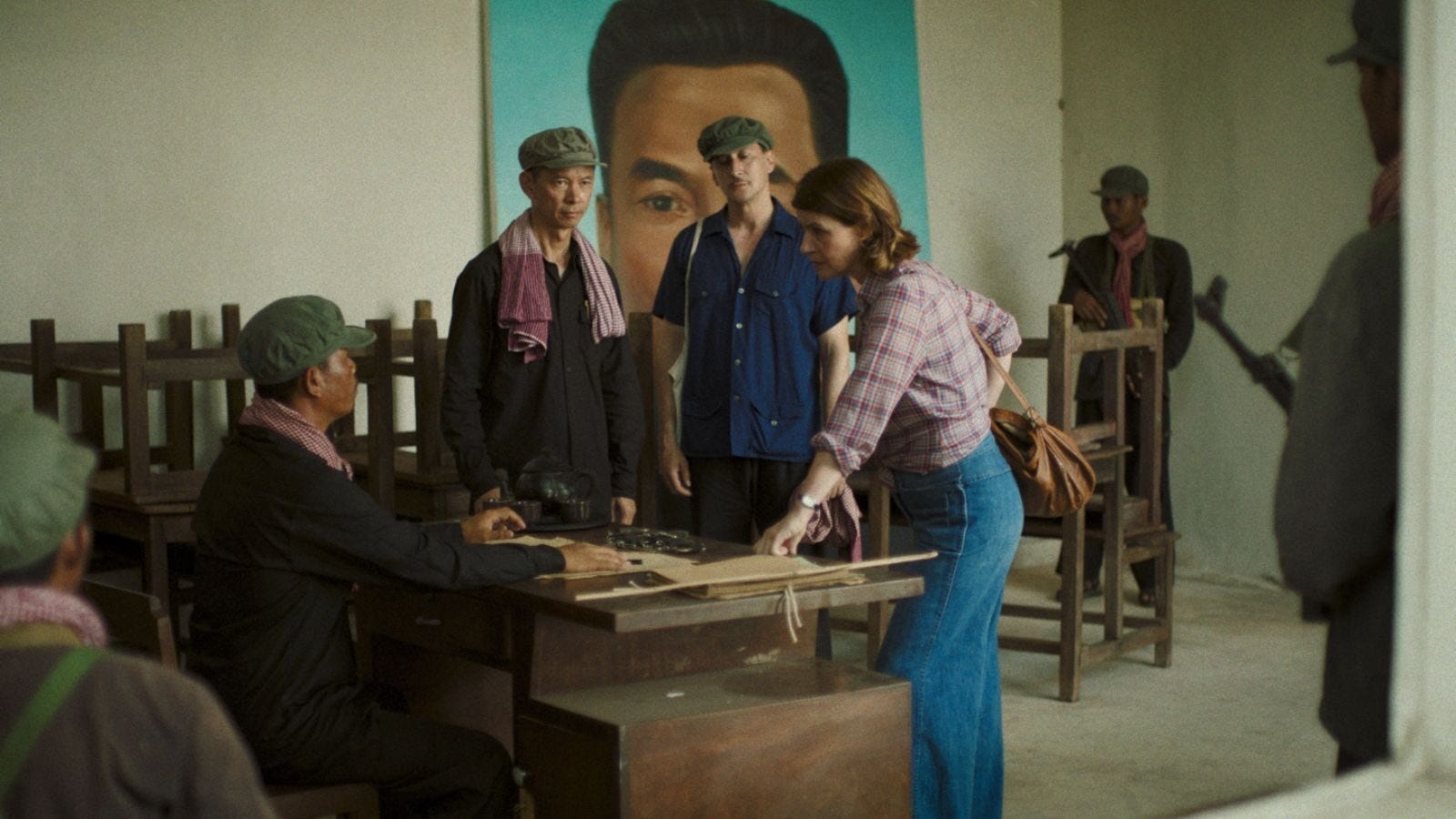
(Irene Jacob in MEETING WITH POL POT playing the character based on me)
Trump’s habit of making everything about himself often backfires. Recently I saw it firsthand when people improbably connected Trump to Pol Pot, the genocidal Cambodian leader responsible for the death of two million of his citizens. They did this after watching a movie.
Two years ago, I walked the red carpet at Cannes for the premiere of “RENDEVOUS AVEC POL POT,” a French movie by the acclaimed director Rithy Panh. It is loosely based on my harrowing two weeks reporting from Pol Pot’s Cambodia and interviewing the dictator. In the film I am transformed into a French journalist played by the incomparable Irene Jacob. The movie was praised as a historical drama remembering a genocide as unthinkable now as the Holocaust. French critics had a hard time imagining how a country as culturally rich as Cambodia could succumb to such a monster.
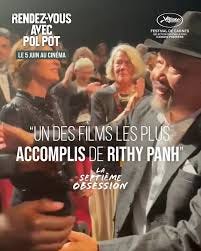
(Irene Jacob, me and director Rithy Panh at Cannes.)
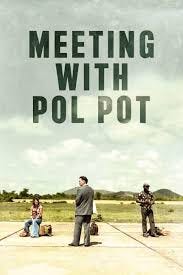
A year later the movie premiered at New York’s Lincoln Center as “MEETING WITH POL POT.” By then Trump had become President and with lightning speed dismantled much of the federal government, eliminated US humanitarian aid overseas, launched attacks on free speech and voting and had begun kidnapping people from the streets and throwing them in concentration camps.
At Lincoln Center I appeared after the movie to answer questions from the audience. To my surprise the film made some in the audience squirm. They saw oblique and frightening comparisons to Trump’s first months in office. Initially I couldn’t see it. Pot’s revolution was the most radical in history. From the very first day his Khmer Rouge army and police not only overthrew a government it eliminated an entire way of life. Soldiers in black pajamas emptied the country’s capital and towns, shepherding everyone to the countryside into makeshift labor camps. Within a month the entire society was shut down, a modernizing Southeast Asian country was being pushed back to nearly feudal days. All institutions were eliminated: hospitals, temples, businesses, banks, schools, markets, universities, stadiums. Professionals, teachers, doctors, monks, business leaders, political figures were either killed or forced to hide their identities. Minorities and foreigners were persecuted and often murdered to “purify” the Cambodian race. Dissent was published by death.
With devastating effect, director Rithy Panh shows the split screen nature of our cloistered visit. While showing us ideal farms and claiming to be the best revolution in history, bags of rice are filled with stones. Crops had failed. People were starving and being worked to death. The Khmer Rouge were fighting among themselves. After my character interviews a farmer, the Khmer Rouge pull him away and murder him for failing to lie about his life. All the while, loudspeakers broadcast constant propaganda.
Several audience members were unnerved that the unabashed lying of the Khmer Rouge reminded them of Trump’s nonstop lies.
In later events I was asked about the Khmer Rouge leadership – many, including Pol Pot – had been among Cambodia’s educated elite yet they degenerated to brute incompetence. They pointed to Trump’s cabinet of deeply unqualified yes-men and yes-women promoting anti-vaccination policies, ignoring the rule of law, seeking vengeance against perceived enemies, and threatening reporters and the media.
Others asked about the cult of Pol Pot. In the movie the reporters visit a warehouse producing statues and portraits of Pol Pot to be sent around the country. It wasn’t much of a leap to see how Donald Trump statues and portraits everywhere.
Eventually I saw a theme, especially after talking with several members of the audience at Notre Dame University. It’s not that Americans believe Trump and Pol Pot are literally alike. What they sensed in the film was something akin to a template for authoritarianism. Shared aspects like the destruction of basic rights, a leader in full control of government without accountability, unrestrained corruption, rule by division and fear of the minority.
As his revolution was falling apart Pol Pot instigated a war against neighboring Vietnam, its former communist ally. The war got underway while we were still in Cambodia. On our last night an assassin broke into our official guest house, threatened us and killed one of my colleagues. That scene ended our visit and the movie.
The Cambodia Town Film Festival in Long Beach, California was one place where Trump wasn’t mentioned. The sponsors and audience were children and grandchildren of survivors of the Pol Pot genocide. Nothing can match the horrors they suffered.
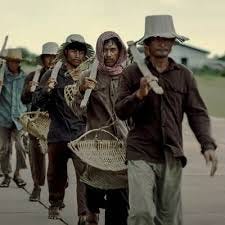
(workers under Pol Pot – from the movie)
The Princeton French Film Festival in May was my final appearance. Trump had been in office for a year and the question period was all about him. Last winter’s occupation of Minneapolis by ICE agents and murder of two peaceful protestors had been an eye-opening turning point. The underlying assumption of the questions seemed to be that Trump is openly trying to remake America into an authoritarian regime. How successful has he been? Is Pol Pot relevant?
Thank you for reading my posts. Please consider subscribing to help me continue my work.
#Cannes #PolPot #Trump #Genocide #SEAsia #Journalism #Race #Dissent #Justice #Equality #NoKings #KhmerRouge #DJT #Dictator #Authoritarian #Film #Cinema #France #America #Corruption America #KillingFields #PhnomPenh #Khmer #FilmFestival #Screening #Democracy #Trump
As usual, you draw upon a rich and eventful career to find lessons in recent history that we would have hoped were settled. The parallels between Trump and Pol Pot are not far fetched. BTW, Barb and I thoroughly enjoyed the film; I have watched it twice. You continue to give Cambodia a voice. There should be some special award for that! —Steve
What a well written, deeply stirring piece. I applaud your courage for going into that country at that time as an investigative journalist. Not many could have done it.